The Public Policy Secretariat (PPS) and the Chamber of Commerce and Industry of Serbia (CCIS) have signed a Cooperation Agreement marking the beginning of a new phase in the digitalisation of administrative procedures for businesses – the development of the e-ATA system, which will enable the fully electronic issuance and use of ATA Carnets. This activity is being implemented within...
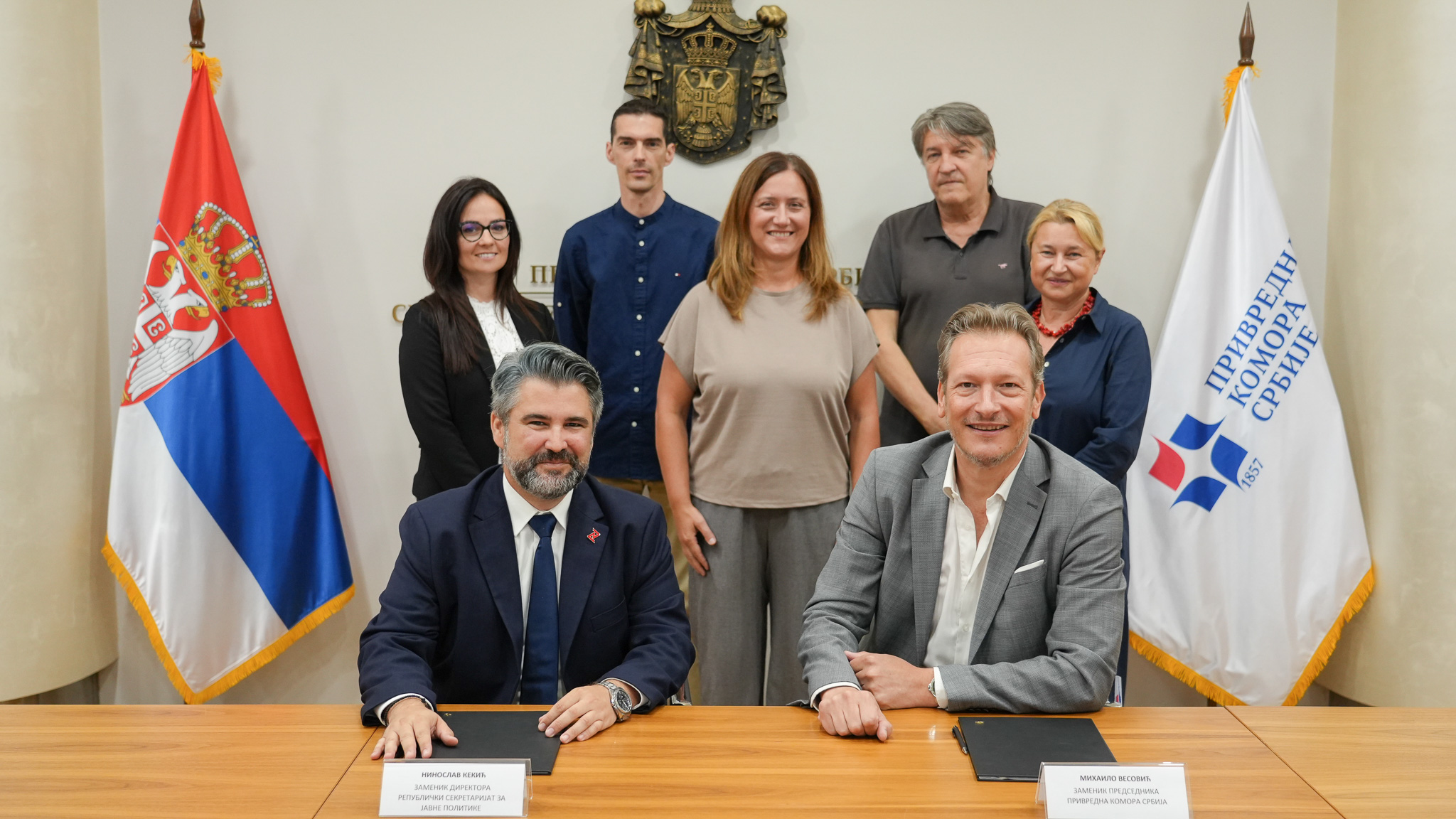
The Public Policy Secretariat (PPS) and the Chamber of Commerce and Industry of Serbia (CCIS) have signed a Cooperation Agreement marking the beginning of a new phase in the digitalisation of administrative procedures for businesses – the development of the e-ATA system, which will enable the fully electronic issuance and use of ATA Carnets. This activity is being implemented within the Digitalisation of the Business Environment in Serbia (D4BE) project, carried out by the Public Policy Secretariat with the financial support of the European Union.
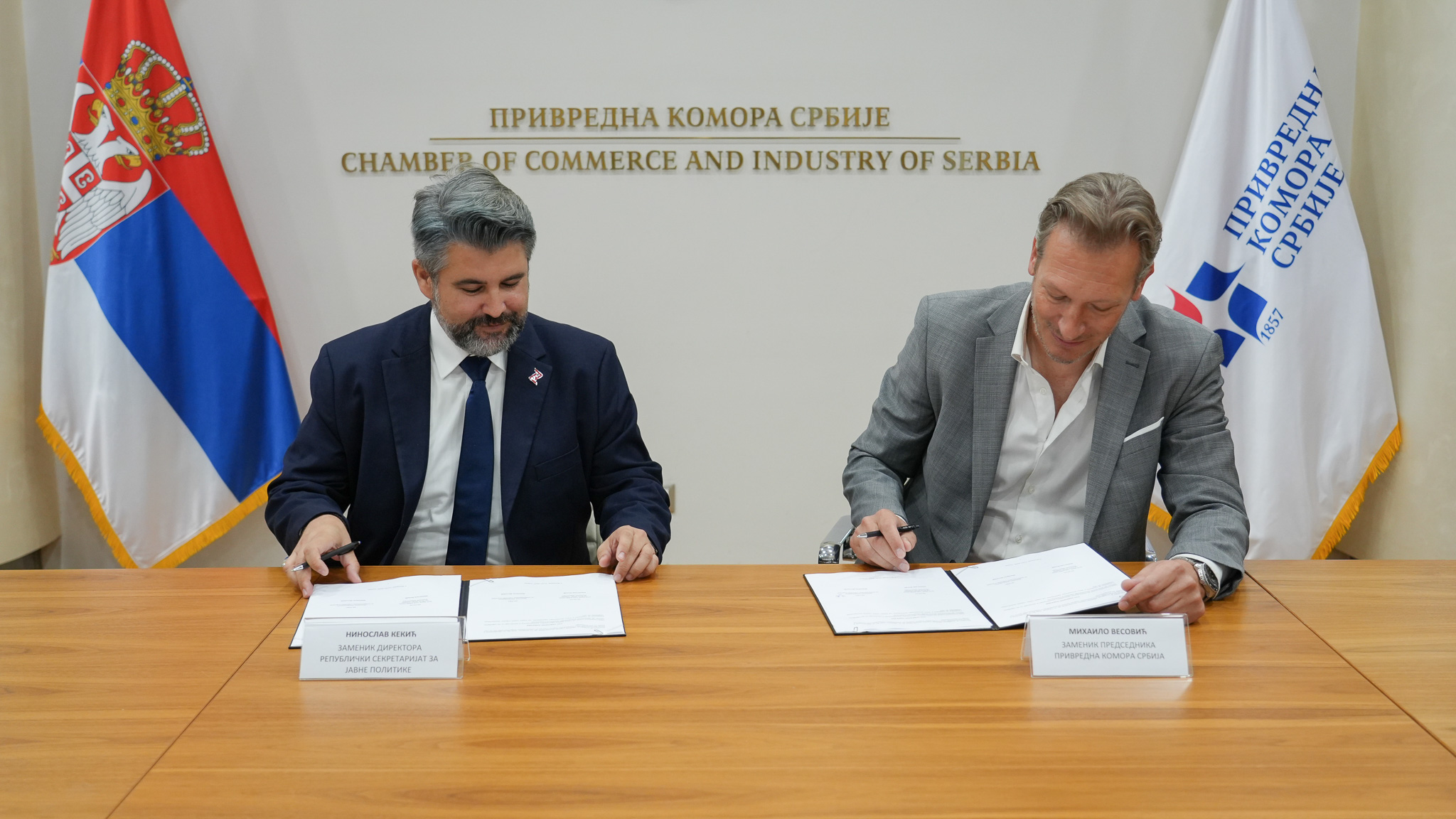
The Agreement was signed at the Chamber of Commerce and Industry of Serbia by Ninoslav Kekić, Deputy Director of Public policy secretariat, and Mihailo Vesović, Vice President of the Chamber of Commerce and Industry of Serbia for International Cooperation and Development.
The signing of the Agreement continues the cooperation between the PPS and the CCIS initiated through the e-PAPIR – Simplification of Administrative Procedures and Regulation reform, aimed at reducing the administrative burden on businesses, improving the business environment, and developing modern digital public administration services. The new system will enable the entire ATA Carnet issuance process to be carried out electronically, allowing companies to conduct their business faster, more easily, and at lower cost.
The e-ATA system will connect businesses, the Chamber of Commerce and Industry of Serbia, the Customs Administration, and other relevant institutions with the International Chamber of Commerce’s ATA Carnet System platform. Companies will be able to submit applications electronically, without visiting the premises of the Chamber of Commerce and Industry of Serbia, while digital ATA Carnets will be used for the temporary import and export of goods in accordance with international standards.
“By signing this Agreement, we are further strengthening our long-standing cooperation aimed at simplifying administrative procedures for businesses. The digitalisation of ATA Carnets will enable companies to complete procedures more quickly, more easily, and at lower cost. Our goal is to ensure that public services are available electronically at any time while meeting the highest security and international standards,” said Ninoslav Kekić, Deputy Director of the Public Policy Secretariat.
Mihailo Vesović, Vice President of the Chamber of Commerce and Industry of Serbia, highlighted the tangible benefits that the digitalisation of ATA Carnets will bring to the Serbian economy.
“Digital transformation will provide Serbian businesses with faster and simpler cross-border operations. Eliminating paperwork will accelerate the issuance of documents, while direct integration with the Customs Administration will reduce the time goods spend at border terminals. For companies, this means lower costs and greater security, as the electronic system eliminates the risk of documents being lost, damaged, or forged,” said Vesović, adding that companies will be able to submit applications electronically at any time, in line with modern global standards.
According to the implementation plan, the e-ATA system is expected to become operational by 15 January 2027, while the full digital processing of ATA transactions in the Republic of Serbia is expected during the first quarter of 2027.
The Digitalisation of the Business Environment in Serbia (D4BE) project is aimed at improving the business environment in Serbia by simplifying and digitalising the administrative procedures that businesses encounter in their operations. The development of digital services reduces the administrative burden, increases the efficiency and predictability of procedures, and enables businesses to dedicate more time and resources to growth and development. The project is implemented by the Public Policy Secretariat with the financial support of the European Union, as part of the broader reform to improve the business environment in the Republic of Serbia.